A) evolution from mitochondria.
B) fusion of plastids.
C) origin of the plastids from archaea.
D) secondary endosymbiosis.
F) A) and C)
Correct Answer

verified
Correct Answer
verified
A) The engulfed cell provided the host cell with adenosine triphosphate (ATP) .
B) The engulfed cell provided the host cell with carbon dioxide.
C) The engulfed cell allowed the host cell to metabolise glucose.
D) The host cell was able to survive anaerobic conditions with the engulfed cell alive.
F) None of the above
Correct Answer
verified
Correct Answer
verified
A) a pigmented central vacuole, surrounded by a nucleomorph
B) a vacuole with food inside
C) a secretory vesicle
D) a contractile vacuole
F) B) and C)
Correct Answer
verified
Correct Answer
verified
A) Paramecium
B) Pfiesteria (dinoflagellate)
C) Entamoeba
D) Plasmodium
F) B) and C)
Correct Answer
verified
Correct Answer
verified
A) The most recent common ancestor of Excavata is older than that of SAR.
B) The most recent common ancestor of SAR is older than that of Unikonta.
C) The most basal (first to diverge) eukaryotic supergroup cannot be determined.
D) Excavata is the most basal eukaryotic supergroup.
F) None of the above
Correct Answer
verified
Correct Answer
verified
A) are unicellular
B) have plastids
C) have alternation of generations
D) have cell walls containing cellulose
F) All of the above
Correct Answer
verified
Correct Answer
verified
A) have the same evolutionary origin
B) have different structures
C) require different sources of energy
D) contain their own DNA
F) A) and C)
Correct Answer
verified
Correct Answer
verified
A) cold fresh water
B) warm fresh water
C) cold seawater
D) warm seawater
F) A) and B)
Correct Answer
verified
Correct Answer
verified
A) gametes fuse, forming an oocyst
B) cells infect the human liver cells
C) cells cause lysing of the human red blood cells
D) oocyst undergoes meiosis
F) A) and B)
Correct Answer
verified
Correct Answer
verified
A) hydrogenosomes and apicoplasts
B) apicoplasts and pseudopods
C) pseudopods and chloroplasts from red algae
D) chloroplasts from both red and green algae
F) A) and B)
Correct Answer
verified
Correct Answer
verified
A) pseudopods
B) a single flagellum featuring the 9 + 2 pattern
C) many cilia
D) contractile vacuoles
F) None of the above
Correct Answer
verified
Correct Answer
verified
A) mid-winter
B) early spring
C) late summer
D) late autumn
F) All of the above
Correct Answer
verified
Correct Answer
verified
A) These parasites live in dark, low-oxygen conditions, and therefore it was adaptive to move all plastid and mitochondrial genes to the nucleus.
B) The original, eukaryotic ancestors of these parasites did not engulf prokaryotes.
C) These parasites live in dark, low-oxygen conditions and therefore loss of genes for plastids and mitochondria did not result in lower fitness.
D) In the future, natural selection will favour descendants that acquire new plastid genes from today's prokaryotes.
F) B) and C)
Correct Answer
verified
Correct Answer
verified
A) Paramecium
B) Pfiesteria (dinoflagellate)
C) Entamoeba
D) Triceratium (diatom)
F) None of the above
Correct Answer
verified
Correct Answer
verified
A) foraminifera → silicon-rich tests
B) dinoflagellata → holdfast
C) diatoms → tests made of cellulose
D) brown algae → blade
F) B) and C)
Correct Answer
verified
Correct Answer
verified
A) two; innermost
B) two; outermost
C) three; innermost
D) three; outermost
F) B) and C)
Correct Answer
verified
Correct Answer
verified
A) Organisms with the mutation evolved convergently.
B) The mutation provided an adaptive advantage to the organisms that contained it.
C) Because the mutation likely occurred only once, all organisms with the mutation have a common ancestor with the mutation.
D) "Reverse evolution" does not occur.
F) All of the above
Correct Answer
verified
Correct Answer
verified
A) 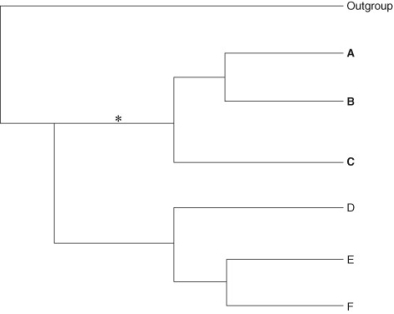
B) 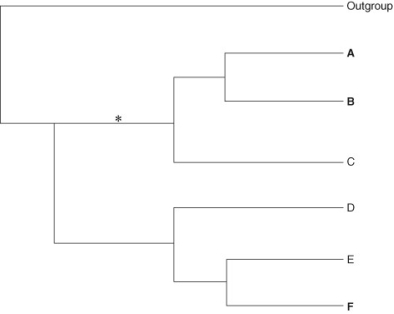
C) 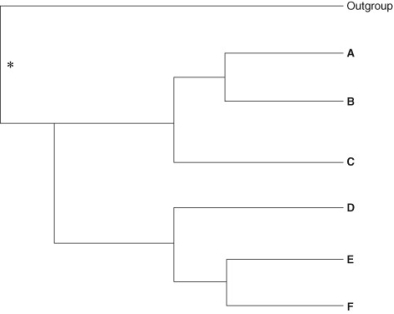
D) 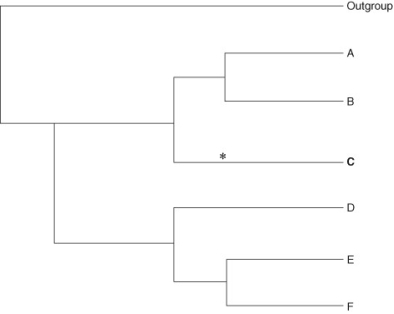
F) C) and D)
Correct Answer
verified
Correct Answer
verified
A) mitochondria of ancestral diplomonads
B) nuclei of archaeans
C) endospores of bacteria
D) capsids of viruses
F) B) and C)
Correct Answer
verified
Correct Answer
verified
Showing 61 - 79 of 79
Related Exams